Stylophorum diphyllum brings cheer in spring with brilliant yellow flowers atop blue-green, pinnately lobed foliage. Growing 12-18” tall and spreading up to 12” wide, Celandine poppy is a very easy to grow native woodland wildflower that will self-sow and create a dense carpet over the years. When cut, the bright yellow pigment of the flowers carries into bright yellow sap and a yellow thick underground stem. Blooming in March and April, it’s a beautiful contrast with native Mertensia virginica, Aquilegia candensis, Phlox stolonifera, and Phlox divaricata.
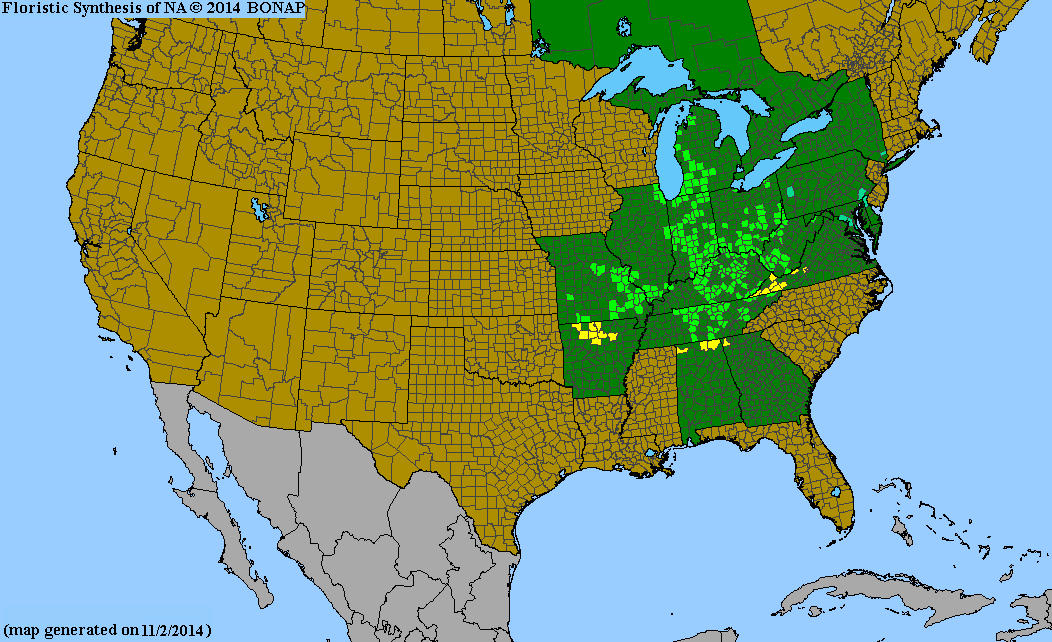
The native range of Stylophorum diphyllum grows from Pennsylvania to Wisconsin, growing in Virginia to Arkansas with isolated populations growing as far north as Ontario. Found in rich, moist deciduous forests and calcareous bluffs, it tolerates all but the driest conditions. Celandine poppy is best grown in part shade to full shade in medium to wet, humus-rich soils. In dry conditions, the plants will go dormant. Found in high-quality woodlands, Celandine poppy is a native plant that is threatened by the aggressive spreading nature of invasives garlic mustard and Japanese stilt grass. The plant will seed itself freely and can self-pollinate in the absence of insect pollinators.
For most of the year, Stylophorum diphyllum goes unnoticed. In the early months of spring, however, the thick carpet of foliage and the glowing yellow blooms bring the cheerful hope of spring to anyone who sees them. Our plants cover the woods around the property and have self-sown into some of the garden beds. While a cheerful plant, we do not recommend it growing in highly dense plantings as it will spread and can become a nuisance. The flowers of Celandine poppy provide little nectar reward to pollinators with pollen being the only enticement. Certain species of beetles, flies, and some bees visit the flowers while the seeds are carried by ants due to the elaisome coating. Chipmunks love eating the seeds.