Solidago sempervirens is a low maintenance native that makes a great addition to pollinator gardens and ornamental flower beds. Growing 3-5’ tall, stems erupt from a tight clump of evergreen blue-green basal leaves. Producing golden-yellow tight blooms at the terminal end of long stalks, seaside goldenrod is notably different for its almost succulent-like foliage and flowers, a protection against the ocean winds. Extremely tolerant of salt, periodic inundation, and drought, Solidago sempervirens is tough and blooms late in the summer, extending the season and adding nectar sources for migrating insects.
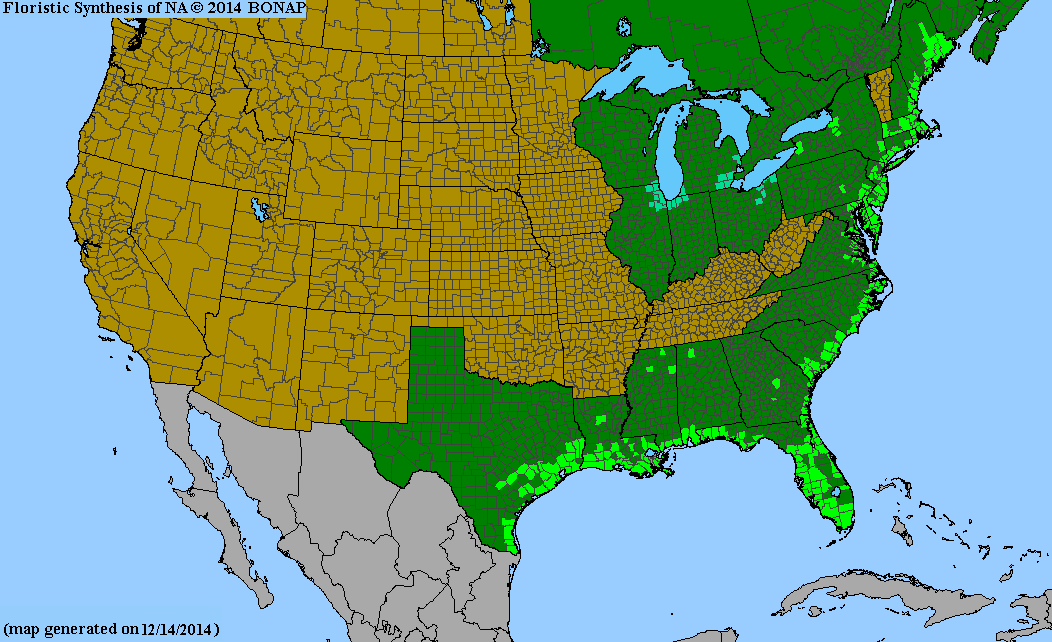
Seaside goldenrod is native to eastern coastal areas stretching from Newfoundland to Texas. Over time, it has naturalized in the Midwest along the Great Lakes. Commonly found along roadsides, pine woods, coastal marshes, estuaries, bay shores in sunny locations with moist to dry soils. It spreads readily by seed and hybridizes easily with Solidago rugosa. In lean soils, the plant generally grows about 3’ tall – in rich, moist garden soil, seaside goldenrod has been known to grow up to 6’ tall and may require pinching or staking. For best appearance, pinch the growing tips in early summer if a more compact plant is desired.
Over the years, Solidago sempervirens wandered through our trial gardens, the evergreen basal leaves providing groundcover all winter. A perfect plant for areas with issues with road salt, we've found it to be a winning combination of bloom, pollinator value, and soil erosion control. A major food source for fall migrating monarch butterfly; seaside goldenrod also provides benefits to native wildlife such as songbirds, butterflies, and small mammals. Solidago sempervirens is useful for dune restoration projects, stormwater management, roadside, and habitat plantings.