Solidago odora is covered in plume-like gold flowers from late August to September. The lanceolate, rough foliage grows upright, about 2-4’ tall and 2’ wide, and earns its moniker by the anise scent when the foliage is crushed. Traditionally used in teas, sweet goldenrod is a wonderful addition to the garden, tolerating a wide variety of soil types from heavy clay to sandy soils.
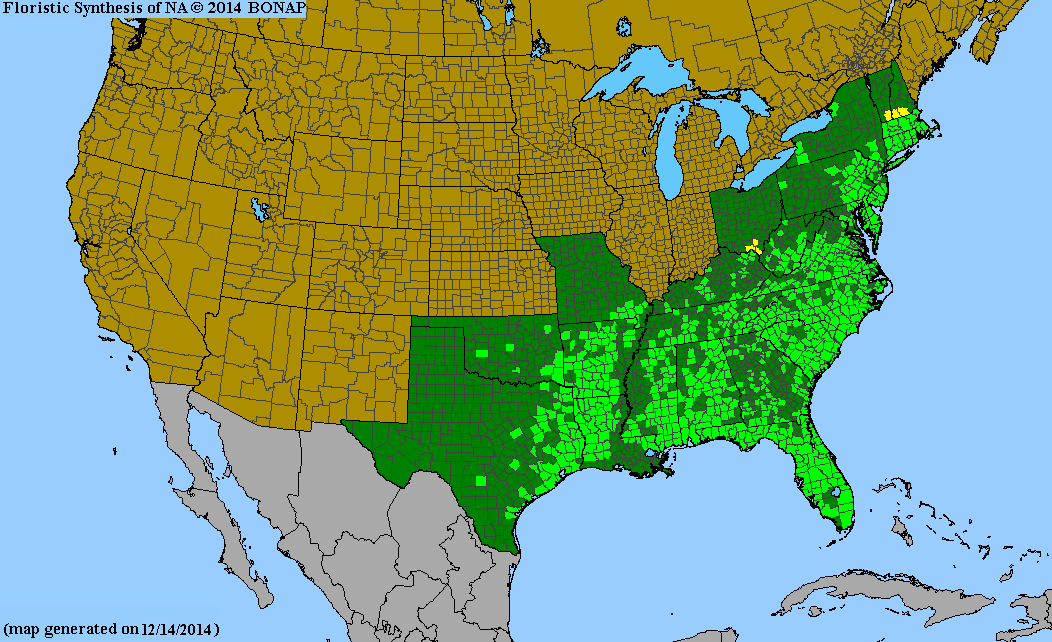
Anise-scented goldenrod grows in thin soils of savannas, pinelands, and dry woods from Texas to Florida, north to Missouri, and east to New Hampshire and New York. Performing well in full sun to light shade and average to sandy, poor soils, Solidago odora is adaptable. It is generally very pest and disease resistant. Unlike other plants in the genus, S. odora is well-behaved, spreading slowly by creeping rhizomes or seed but nowhere as aggressively as S. canadensis and its ilk. Once established, it is drought-tolerant.
Goldenrod is a favorite for many pollinator species. S. odora attracts butterflies, bees, ladybugs, lacewings and other beneficial insects. Additionally, it is a larval host plant for a native leaf beetle, leafhoppers, and several flies. Adding this plant in conjunction with other goldenrod can lengthen your blooming season, prolong pollinator nectar sources, and provide habitat. Small birds such as goldfinch and Indigo bunting enjoy the seeds and the foliage is necessary forage for young woodland animals. Its high ecological value and handsome appearance make it a valuable addition to wildflower gardens, meadows and naturalistic borders.