Solidago caesia is a clump-forming native perennial with bold displays of arching wands of gold clusters in September, contrasted by blue-green stems. This goldenrod adds life to dry, shady spots and its simple foliage and upright habit grow 1-3’ tall; a perfect lower height for a light transition area of a garden. It works well in combination with Aster cordifolius and Chasmanthium latifolium, attracting many a pollinator and adding interest to a flower arrangement.
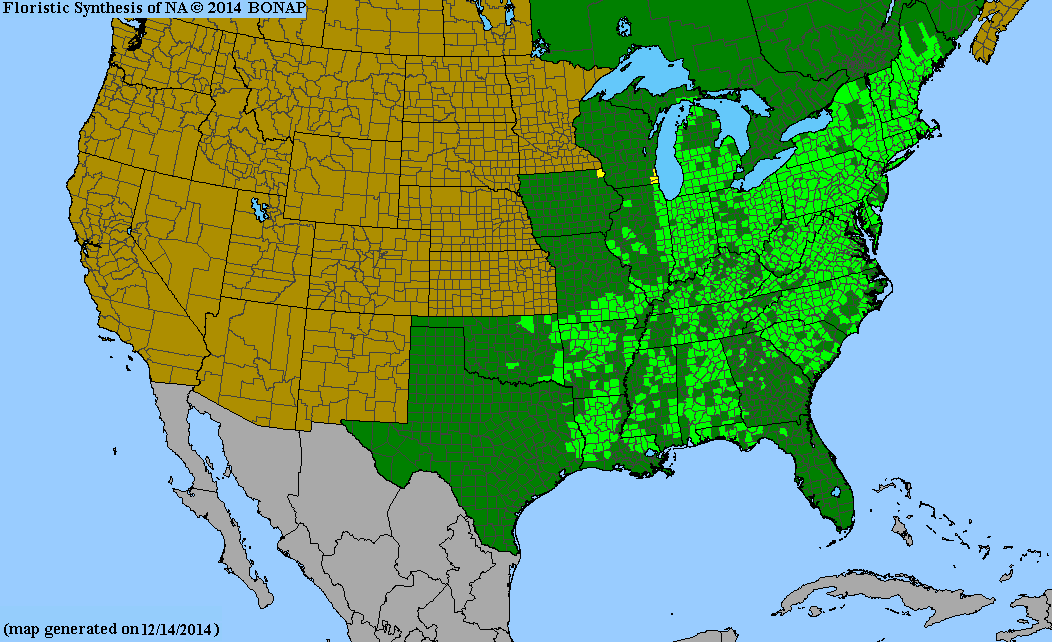
Blue-stemmed goldenrod grows in forest edges, forests, and woodlands from northern Canada to Florida and west to Missouri and Texas. Performing well in full sun to light shade and dry to mesic soils, Solidago caesia is adaptable. It is generally very pest and disease resistant. Unlike other plants in the genus, S. caesia is well-behaved, spreading slowly by creeping rhizomes or seed but nowhere as aggressively as S. canadensis and its ilk. Once established, it is drought-tolerant.
Goldenrod, and especially the species growing in woodlands, are a favorite for many pollinator species. S. caesia supports 10 specialist pollinators, which feed specifically on late-season goldenrod. Additionally, it is a larval host plant for a native leaf beetle, leafhoppers, and several flies. Adding this plant in conjunction with other goldenrod can lengthen your blooming season, prolong pollinator nectar sources, and provide habitat. Small birds such as goldfinch and Indigo bunting enjoy the seeds and the foliage is necessary forage for young woodland animals. It is best used at the woodland's edge on in a shaded butterfly or wild garden.